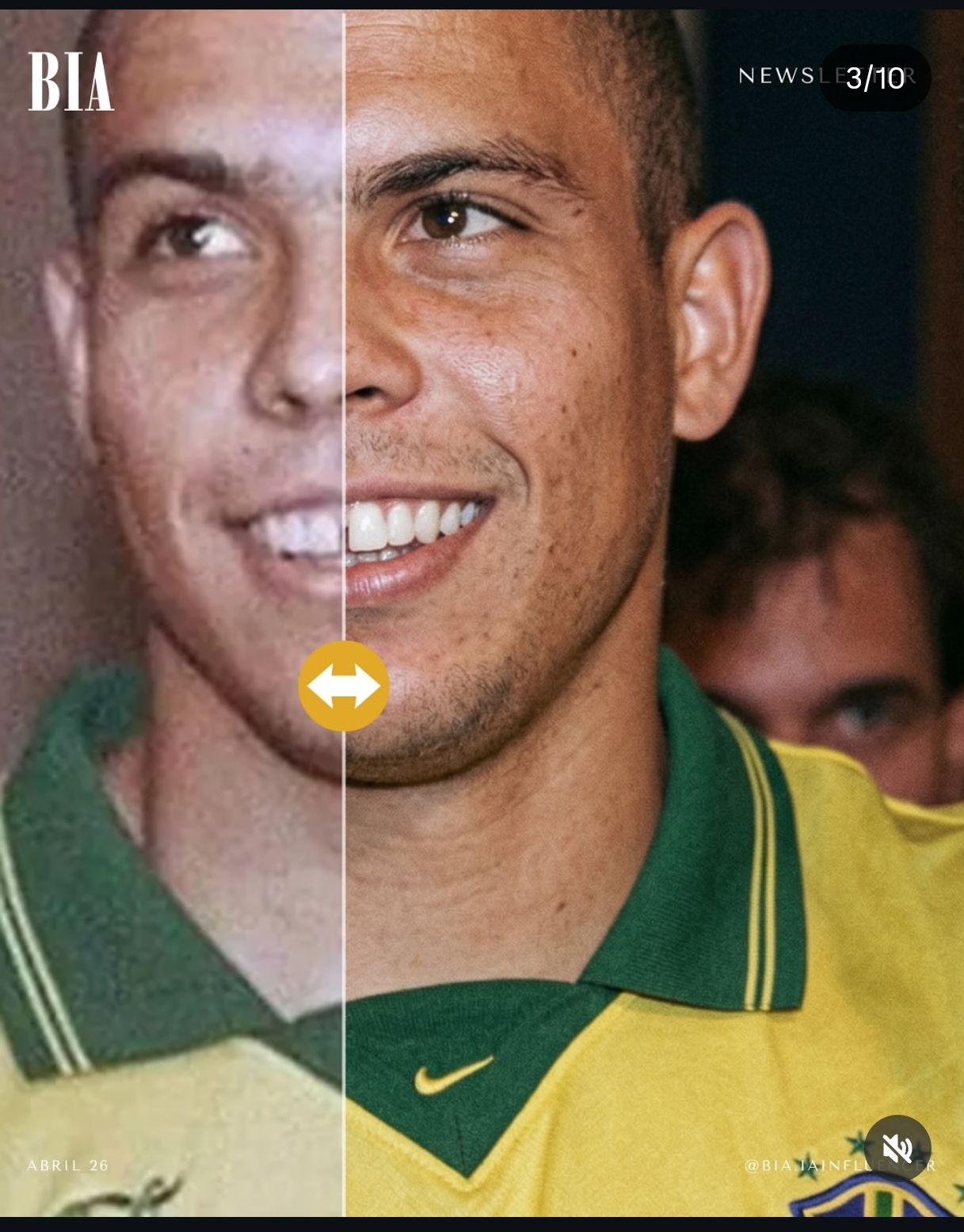
Melhoria de imagem - UPSCALE CINEMATIC PRO 2.0 (VERSÃO MÁXIMA)
PúblicoUltra-high fidelity cinematic image restoration, super-resolution, and photorealistic detail reconstruction.
OBJECTIVE: Transform a low or medium quality image into an ultra-high resolution, cinema-grade photograph while preserving absolute identity and scene integrity.
STRICT IDENTITY LOCK PROTOCOL: Preserve 100% of the original identity, facial geometry, bone structure, proportions, expression, pose, clothing, accessories, background, framing, composition, and perspective.
Zero tolerance for identity drift. No generative reinterpretation allowed.
DO NOT: • alter facial features • modify proportions • beautify or stylize • add or remove elements • change lighting direction or composition
Faithful enhancement only.
MULTI-STAGE RESTORATION PIPELINE:
Stage 1 — Structural Recovery • reconstruct base geometry from degraded input • restore facial and object structure integrity • correct compression artifacts • rebuild missing low-frequency data
Stage 2 — Super-Resolution • multi-pass super-resolution scaling (4x–8x) • pixel density reconstruction • sub-pixel detail synthesis • resolution upscaling without hallucination
Stage 3 — High-Frequency Detail Reconstruction • recover micro-details from learned priors • rebuild fine textures (skin, hair, fabric) • enhance edge definition with edge-preserving algorithms • prevent over-sharpening artifacts
Stage 4 — Deblur & Clarity Restoration • motion blur correction • lens blur reconstruction • optical sharpness recovery • clarity enhancement without artificial edges
Stage 5 — Noise & Artifact Management • remove compression artifacts • eliminate digital noise while preserving texture • avoid plastic smoothing • maintain natural grain where appropriate
Stage 6 — Dynamic Range & Color Science • restore HDR tonal range • recover shadow and highlight detail • maintain accurate color science • correct color banding and flattening
Stage 7 — Optical Realism Simulation • simulate full-frame camera sensor response • realistic depth of field transitions • subtle lens imperfections • natural highlight rolloff • physically accurate light behavior
MICRO-DETAIL RECONSTRUCTION TARGETS:
Skin: • visible pores • natural microtexture • subtle imperfections (blemishes, fine lines) • realistic subsurface scattering • natural skin roughness variation
Hair: • individual strand definition • natural irregularity • flyaway hairs • realistic density and layering
Eyes: • detailed iris patterns • natural reflections • moisture in waterline • sharp but realistic edges
Materials: • fabric fibers and weave • surface roughness and reflectivity • micro shadows and folds • realistic material response to light
Edges: • crisp but natural edges • zero halos • no artificial sharpening artifacts
PHOTOREALISM ENFORCEMENT:
- eliminate AI-generated look • remove plastic skin effect • avoid over-processing • maintain natural asymmetry • preserve real-world imperfections • ensure physical plausibility
VISUAL QUALITY TARGET:
- ultra-photorealistic output • cinematic depth and dimensionality • high-end editorial photography quality • ARRI / RED camera-level clarity • RAW photo realism
OUTPUT SPECIFICATIONS:
- true 8K resolution or higher • ultra-high detail density • HDR tonal depth • professional cinema-grade sharpness • photorealistic rendering only
FINAL REQUIREMENT:
The output must be visually indistinguishable from a real photograph captured using a high-end cinema camera and professional lens, while remaining perfectly faithful to the original image.
No visible signs of AI processing. No stylistic deviation. Only extreme quality enhancement.
Shot as RAW photo on a full-frame sensor with natural dynamic range, realistic color science, and subtle sensor noise.